
BioXgen is at the forefront of cardiothoracic surgery, developing advanced therapies that harness the potential of the extracellular matrix (ECM) and matrix-bound nanovesicles (MBVs) to enhance healing and mitigate inflammation. Our proprietary ECM, enriched with MBVs, is designed as a bioscaffold to protect and provide structural integrity to the surface of a damaged heart following cardiac surgery. This barrier protection promotes immunomodulation, reduces errant signal propagation and facilitates tissue repair, establishing a new benchmark in post-operative care, particularly for cardiovascular surgery patients.
Our innovative ECM bioscaffold is a candidate for the FDA’s 510(k) premarket notification process. By integrating ECM bioscaffolds with MBVs, BioXgen’s technology represents a transformative advancement in cardiothoracic surgery, with a focus on reducing the incidence of postoperative cardiothoracic complications.
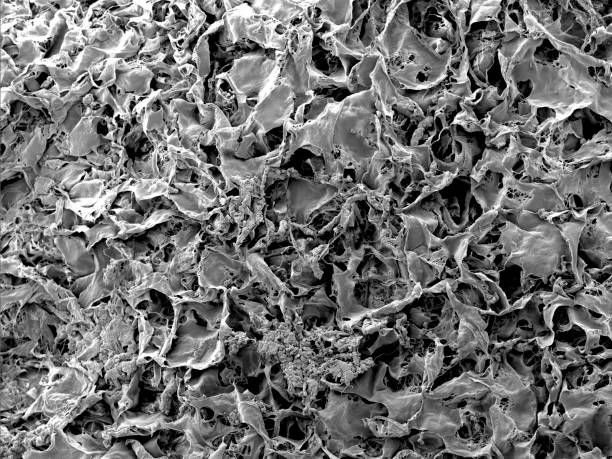
The extracellular matrix (ECM) is a dynamic, three-dimensional network of proteins, glycoproteins, and proteoglycans that surrounds and supports cells in tissues throughout the body, playing a pivotal role in maintaining structural integrity and orchestrating cellular activities. Beyond providing mechanical scaffolding to withstand physical stresses, the ECM regulates essential functions such as cell adhesion, migration, proliferation, and differentiation through biochemical signaling via integrins and other receptors, while also influencing tissue homeostasis by sequestering growth factors and modulating inflammation. In the realm of repair and regeneration, the ECM acts as an ideal bio scaffold in tissue engineering and regenerative medicine; decellularized ECM-derived materials mimic the native microenvironment, offering a biocompatible framework that promotes cell infiltration, vascularization, and extracellular remodeling, thereby facilitating the restoration of damaged tissues and organs with minimal immune rejection and enhanced functional recovery.
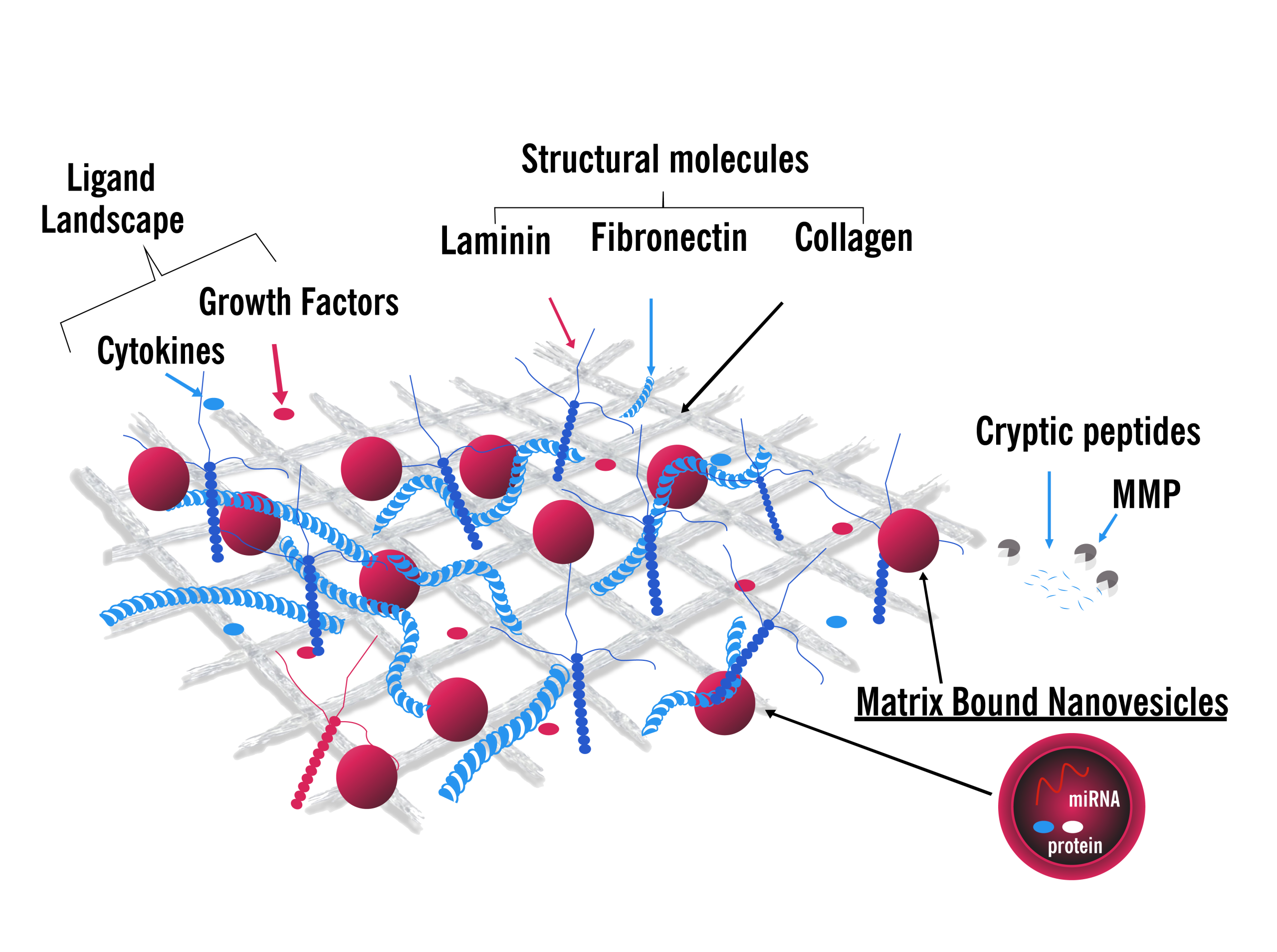
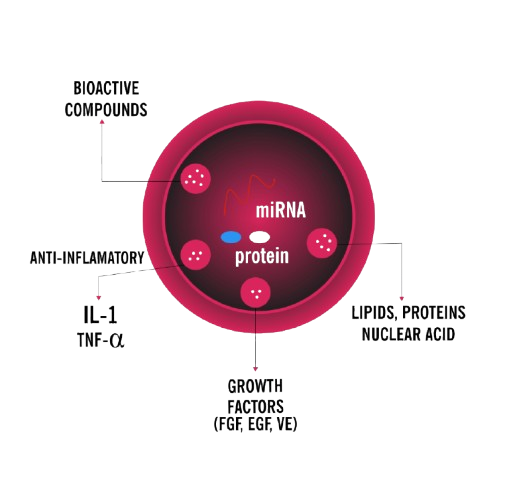
Matrix-bound nanovesicles (MBVs), embedded within the extracellular matrix (ECM) bioscaffolds, represent a novel class of extracellular vesicles ranging from 10 to 1000 nanometers in diameter, enriched with bioactive molecules such as microRNAs, lipids, and proteins that facilitate intercellular communication and tissue-specific signaling. These nanovesicles play a crucial role in modulating the immune response by promoting anti-inflammatory macrophage phenotypes, sequestering cytokines like IL-33 to drive pro-remodeling activities, and influencing cellular processes including proliferation, differentiation, and migration through targeted delivery of their cargo, thereby maintaining tissue homeostasis and mitigating pathological inflammation.
In the context of healing, repair, and regeneration, MBVs serve as potent therapeutic agents in regenerative medicine; isolated from decellularized ECM, they recapitulate the beneficial effects of native scaffolds by alleviating conditions such as ischemia-induced retinal damage, particulate-induced osteolysis, and rheumatoid arthritis, while enhancing vascularization, reducing scar formation, and supporting functional tissue restoration with minimal immunogenicity, as evidenced in preclinical models.

Cutting edge new science demonstrates that MBV bioscaffolds recruit and coordinate extracellular and intracellular signals that downregulate pro-inflammatory pathways and or upregulate pro-regenerative pathways.

Our ECM+MBVs Bioscaffold mimics the native cardiac architecture and provides structural support for a damaged heart undergoing repair. Our ECM+MBVs Bioscaffold acts as a 3-D scaffold for native cell migration, localized proliferation as well as reducing errant signal propagation.

Our ECM+MBVs Bioscaffold supports the underlying damaged epicardial cells, by creating a reservoir of bioactive molecules that provide the milieu for proper and effective cellular signaling. Thereby allowing for positive cytokine and growth factor activation leading to an anti-inflammatory and regenerative environment that enhances cardiac tissue repair.
As a key biological component of native ECM bioscaffolds, MBVs are essential to its immunomodulatory properties. Comprising microRNAs, cytokines, lipids, and other bioactive signaling molecules, MBVs orchestrate the molecular mechanisms that drive intrinsic ECM bioscaffold’s therapeutic efficacy in tissue repair and regeneration.
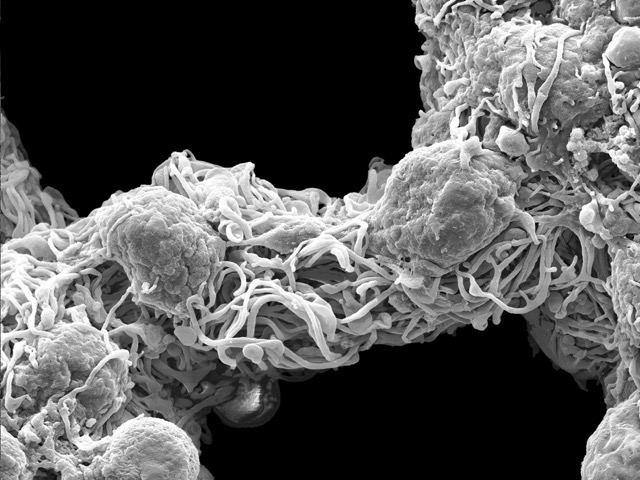
POAF increases morbidity, extends hospital stays, relies heavily on medications, and escalates costs for patients recovering from open heart surgery.
Significant foundational evidence by BioXgen’s team demonstrates ECM bioscaffolds integrated with MBVs applied to the surface of the heart during surgery reduces post-operative complications resulting from cardiothoracic surgery.